Essex Medical Training delivers Basic Life Support (BLS) and Immediate Life Support (ILS) training for healthcare teams across Essex: NHS and community services, care homes, GP and dental practices, clinics, private ambulance providers and event medical teams. Every course is taught by a practising paramedic or emergency clinician and follows the current Resuscitation Council UK guidelines, updated in 2025.
We run BLS and ILS updates on a rolling programme for an NHS foundation trust serving Essex and east London, so our trainers teach resuscitation every week, not once a year. Courses run at our training centre in Battlesbridge, between Chelmsford and Southend, or at your own premises anywhere in Essex, Southend-on-Sea and Thurrock.
Resuscitation Courses We Deliver
Three levels, matched to the role. Prices exclude VAT.
BLS Or ILS: Which Does Your Team Need?
Basic Life Support is the minimum for anyone in a clinical or care role who could be alone with a patient when they collapse. It is a skills update, not a qualification, and most employers and regulators expect it to be refreshed every year. It is the right course for care home and domiciliary care staff, healthcare assistants, dental nurses, practice staff and allied health professionals.
Immediate Life Support is for clinicians who are expected to lead a resuscitation attempt until more help arrives: nurses and doctors in urgent and primary care, paramedics and emergency ambulance staff, event medics and FREC 4 holders. It adds airway adjuncts, rhythm recognition, the full treatment algorithm and team working to the BLS core. The QA Level 4 Award in ILS is a regulated qualification and carries an entry requirement: a FREC 4 or equivalent, or registration as a healthcare professional working in an emergency or primary care setting.
Neither course replaces the workplace first aid qualification an employer needs for its first aid needs assessment. If your service also needs First Aid at Work or Emergency First Aid at Work cover, we can run both.
Not sure which applies? Tell us the roles in your team and we will say which course fits.
Taught To The 2025 Guidelines
The Resuscitation Council UK published updated guidelines in 2025. All of our BLS and ILS teaching, manikin feedback and assessment follows the current guidelines, and our course materials were updated when they changed.
Our trainers are practising paramedics and emergency department clinicians who attend cardiac arrests as part of their own work. They teach what they do.
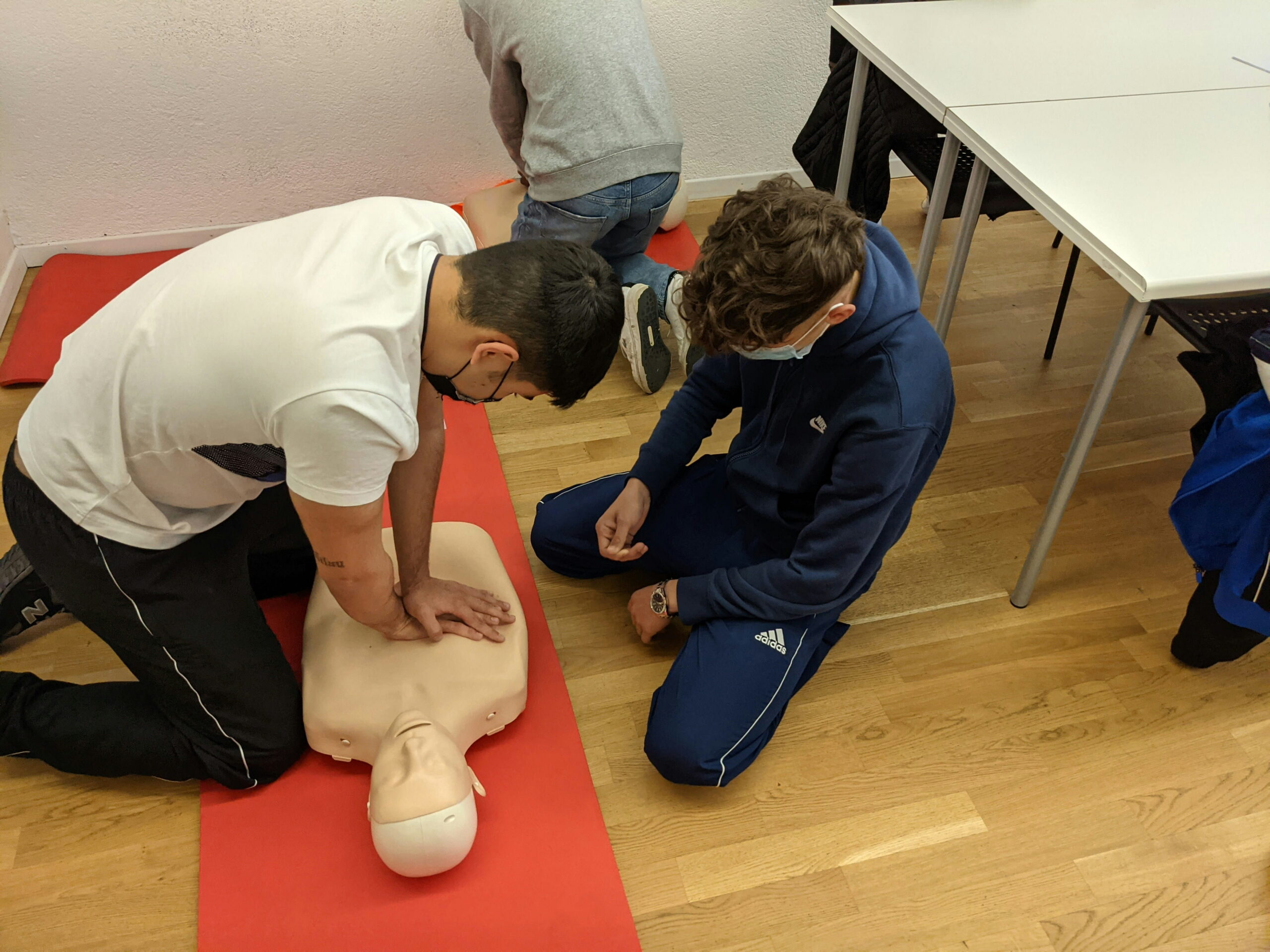
We work with a maximum of 12 learners per trainer, with enough manikins and AED trainers for everyone to get real hands-on time.
BLS And ILS At Your Site
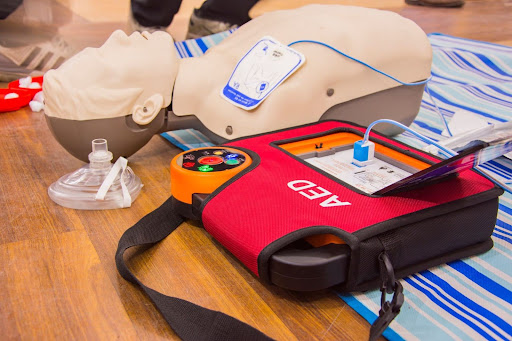
Most of our resuscitation training is delivered on site, because clinical teams cannot easily leave the building. We bring the trainer, adult and paediatric manikins with feedback, AED trainers, airway equipment and all consumables. You provide a room and, for ILS, enough time for everyone to run a full scenario.
BLS updates can be run as two half-day sessions in one visit so that a ward, home or practice keeps running. For NHS and larger care providers we can schedule a rolling programme across the year with a single point of contact, attendance records and certificates issued after each session.
Many of the same teams also book our Moving and Handling training, which we can deliver on the same visit.
Who We Train
NHS And Community Services
Rolling BLS and ILS update programmes for inpatient units, community teams and clinics, with attendance records for your training matrix.
Care Homes And Home Care
Annual BLS for care staff, with the recognition and escalation of a deteriorating resident built into the scenarios.
GP, Dental And Private Clinics
Whole-practice BLS and AED updates, and ILS for the clinicians who lead, scheduled around your sessions.
Ambulance And Event Medical
ILS as the next step after FREC 4 for private ambulance crews and event medical providers, at one of only two fixed-venue FREC centres in Essex.
BLS And ILS Questions
Is BLS The Same As Emergency First Aid At Work?
No. BLS is a resuscitation skills update for clinical and care staff and is usually refreshed every year. Emergency First Aid at Work is a regulated three-year workplace first aid qualification that covers a much wider range of injuries and illnesses. Many healthcare employers need both.
How Often Should BLS And ILS Be Refreshed?
Most NHS and care employers require an annual BLS update. The QA Level 4 ILS certificate is valid for one year, and skills are best refreshed at least annually in any case.
Who Can Attend The ILS Course?
Learners must be 18 or over and either hold a FREC 4 or recognised equivalent, or be a registered healthcare professional working in an emergency or primary care setting. If you are unsure whether your background qualifies, ask us before booking.
Do You Follow The Resuscitation Council UK Guidelines?
Yes. All of our resuscitation training follows the current Resuscitation Council UK guidelines, which were updated in 2025, and our trainers are practising paramedics and emergency clinicians.
Can You Train A Whole Ward, Home Or Practice?
Yes. We deliver on site anywhere in Essex, Southend-on-Sea and Thurrock with up to 12 learners per trainer, and can run two sessions in a day or a rolling programme across the year so that cover is maintained.
How Much Does ILS Cost?
The QA Level 4 Award in Immediate Life Support is £180 + VAT per person for a one-day course at our Battlesbridge centre. BLS and on-site ILS are priced per group; contact us with the number of learners and we will quote.
Arrange BLS Or ILS Training In Essex
Tell us the roles in your team, the number of people and when their current certificates expire, and we will reply with the right course, dates and a price.
Call us: 0800 820 3692